
 Português
 Español
 Français
 Deutsch
 Italiano
Watering · 3 min read
When to water houseplants: the finger test and 3 more signs
Know exactly when to water: the finger test, the weight of the pot, the leaves and the colour of the compost. Simple, with no guesswork.
In this guide · 7 parts
Watering on the wrong day is the most common reason houseplants die. And the problem is almost always too much water, not too little. The good news: the plant and its pot tell you when it's time. You just need to know where to look.
The finger test
It's the most reliable sign, and it costs nothing.
- Push your finger into the compost near the edge of the pot, about 2 to 3 cm deep.
- Dry at that depth: for most foliage plants, it's time to water.
- Damp or cool to the touch: wait another day or two and test again.
The depth changes a little from plant to plant:
- Tropical foliage plants, such as devil's ivy, Swiss cheese plant and arrowhead plant: water when the top 2 to 3 cm are dry.
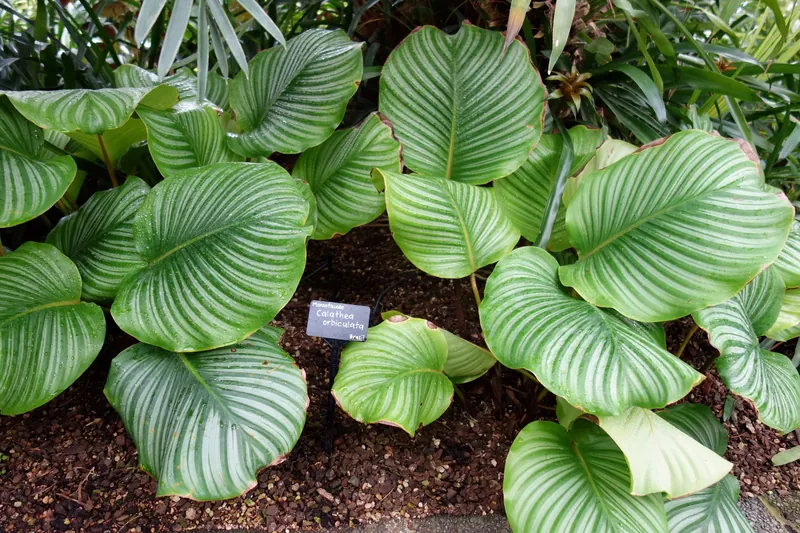
- Plants that like their compost always moist, such as Boston fern, calathea and peace lily: water when the surface starts to dry.
- Succulents and cacti, such as aloe vera, echeveria and snake plant: only water when the compost is completely dry, deeper down too.
The weight of the pot
Lift the pot straight after watering and remember how it feels. That's the weight of compost full of water. A few days later, lift it again. The lighter it is, the drier it is.
Over time, you'll know when to water just by picking up the pot. It works very well for small and medium pots, and for orchids.
The leaves
Leaves give signs too, but they come later than the signs in the compost.
- Limp, drooping leaves with dry compost: the plant is thirsty. The peace lily is famous for this. It flops completely, then perks up a few hours after watering.
- Limp leaves with wet compost: take care, this can mean too much water. Waterlogged roots rot and stop carrying water to the leaves.
- Succulents with thin, wrinkled leaves: they need water.
- Succulents with soft, see-through leaves: they've had too much water.
So always check the compost before you water a drooping plant.
The colour of the compost and the roots
Wet compost is darker, and dry compost is lighter. With a moth orchid in a clear pot, look at the roots:
- Silvery: it's time to water.
- Green: there's still water.
How to water when it's time
- Water thoroughly, until water runs out of the drainage hole. That way all the compost gets moist, not just the surface.
- Empty the saucer after a few minutes. Standing water under the pot keeps the roots waterlogged.
- Use a pot with a hole. Without drainage, any watering can turn into overwatering.
Why watering “every Monday” doesn't always work
A fixed routine helps you remember, but how much water a plant needs changes with:
- heat and humidity;
- the light in the room;
- the size of the pot;
- the season: when it's cold, almost all plants drink less.
The ideal is to have a reminder, then do the finger test when it goes off.
Summary
- Finger test, 2 to 3 cm deep.
- Weight of the pot.
- Drooping leaves: check the compost first.
- Water thoroughly and empty the saucer.
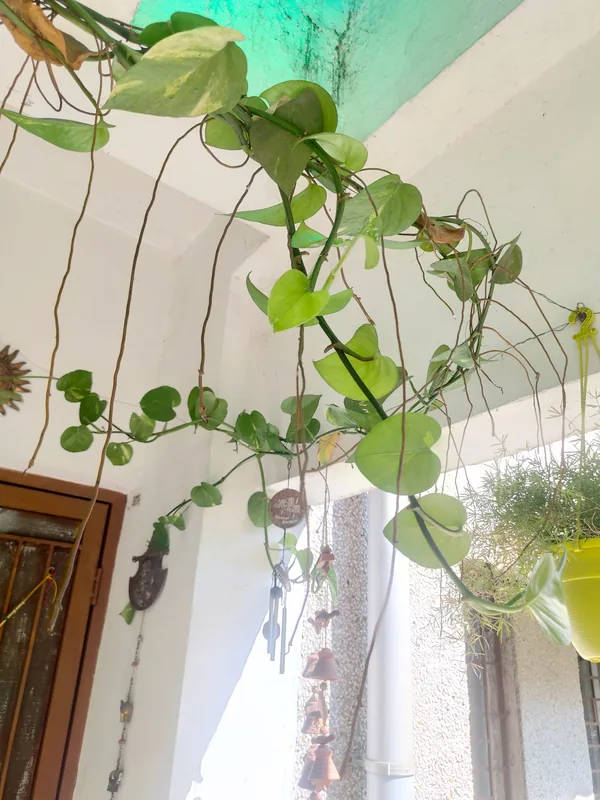 Plant in this guideDevil's ivySee the full plant page
Sources
momiroot catalogue plant pages, with watering guidance from NC State Extension and the RHS (links on each plant's page).