
 Português
 Español
 Français
 Deutsch
 Italiano
 Polski
Yellow leaves and soft stems
Leaves turning yellow and stems darkening at the base.
Causes: Too much water.
What to do: Wait for the top of the compost to dry before watering and remove the rotten parts.
Foliage · Easy · Partial shade to bright indirect
Epipremnum pinnatum · also known as dragon-tail plant, pothos · Family Araceae
Main photo: Mokkie · CC BY-SA 3.0 · Wikimedia Commons
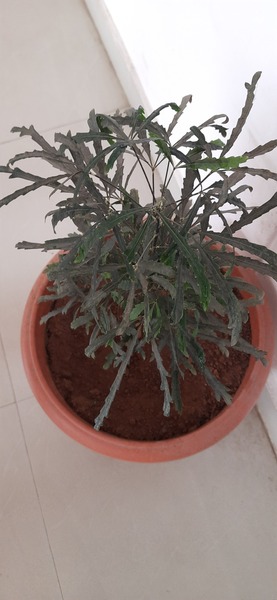
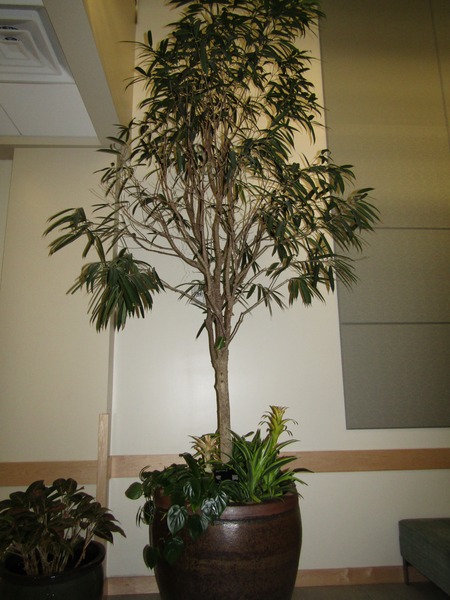
A close relative of the common devil's ivy, with green leaves without yellow marks. In a pot, the leaves stay whole; climbing a pole, they grow larger and cut.
Shelf, hanging pot or climbing a moss pole, near a bright window.
Partial shade to indirect light. Direct sun scorches the leaves.
Water when the top of the compost dries out; keep moist, without waterlogging.
The name pinnatum comes from the mature leaves, which become deeply cut, like a feather.
It has calcium oxalate crystals. When chewed, it causes irritation of the mouth and throat, drooling, vomiting and difficulty swallowing. NC State Extension flags moderate toxicity for pets and people. Keep it out of reach and, if it is eaten, contact a vet or seek medical care.
If your pet eats any part of it, contact a vet or a poisons information service.
Leaves turning yellow and stems darkening at the base.
Causes: Too much water.
What to do: Wait for the top of the compost to dry before watering and remove the rotten parts.
White spots or fine webs on the undersides of the leaves.
Causes: Common pests on houseplants.
What to do: Wipe the leaves with a damp cloth and repeat for a few weeks.
Water when the top of the compost dries out, which usually means about every 5 days. Keep moist, without waterlogging. momiroot reminds you to water and shows the weather in your city.
They are different species in the same genus. The common devil's ivy (Epipremnum aureum) has yellow marks; Epipremnum pinnatum is green and, when mature, has cut leaves.
Yes. It contains calcium oxalate and is toxic to cats and dogs. If your pet chews the plant, contact a vet.
Listed in: Plants for low light · Easy-care plants · Foliage plants · Genus Epipremnum
Sources: NC State Extension · GBIF · POWO (Kew) · ASPCA