
 Português
 Español
 Français
 Deutsch
 Italiano
 Polski
Falling leaves
Leaves turning yellow and falling.
Causes: Waterlogged soil or being moved.
What to do: Let the compost dry out more between waterings and keep the plant in the same spot.
Foliage · Easy · Bright indirect to full sun
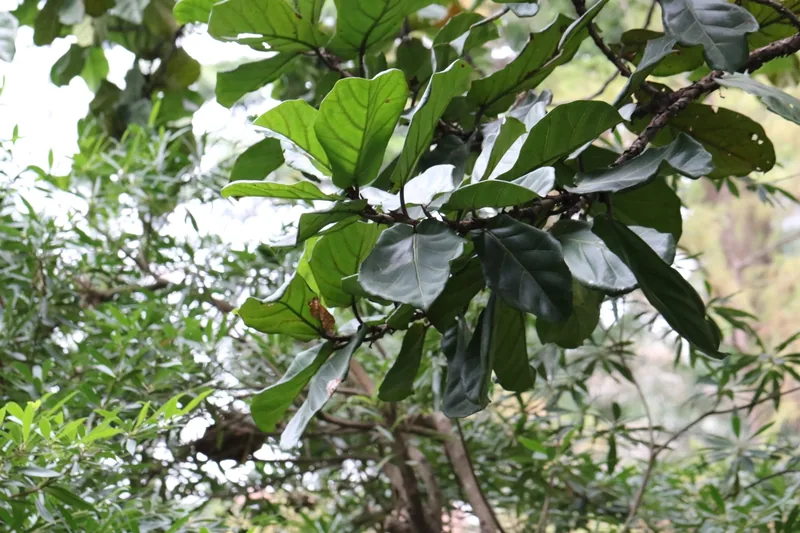
Ficus binnendijkii · also known as banana leaf fig, ficus alii · Family Moraceae
Main photo: Ben PL · CC BY-SA 4.0 · Wikimedia Commons
A ficus with long, narrow leaves that hang from the branches. It is usually sold with braided trunks.
Bright living room, near a window, in a fixed spot.
Strong indirect light. It tolerates partial shade.
Water when the top 3 to 5 cm of compost have dried out. It does not like waterlogged soil.
It also appears in the trade under the name Ficus maclellandii, but the name accepted today is Ficus binnendijkii.
The ASPCA classes ficus as toxic to dogs and cats: the white latex can irritate the skin and stomach. In people, toxicity is low. Wear gloves when pruning and, if your pet chews the plant, contact a vet.
If your pet eats any part of it, contact a vet or a poisons information service.
Leaves turning yellow and falling.
Causes: Waterlogged soil or being moved.
What to do: Let the compost dry out more between waterings and keep the plant in the same spot.
Scales, white spots or tiny flies on the leaves.
Causes: Common pests on ficus.
What to do: Clean the leaves and repeat for a few weeks.
Water when the top 3 to 5 cm of compost have dried out, which usually means about once a week. momiroot reminds you to water and shows the weather in your city.
It prefers strong indirect light. It also tolerates partial shade.
Yes. The ASPCA lists ficus as toxic to dogs and cats. If your pet chews the leaves, contact a vet.
Listed in: Easy-care plants · Foliage plants · Genus Ficus
Sources: ASPCA · GBIF · POWO (Kew) · NC State Extension