
 Português
 Español
 Français
 Deutsch
 Italiano
 Polski
Yellow, falling stems
Stems turning yellow and dropping their “leaflets”.
Causes: Compost that dried out too much, too little light or strong afternoon sun.
What to do: Adjust watering and light, and cut dry stems back to the base. It will regrow.
Foliage · Easy · Partial shade to bright indirect
Asparagus densiflorus · also known as sprenger's asparagus, asparagus densiflorus · Family Asparagaceae
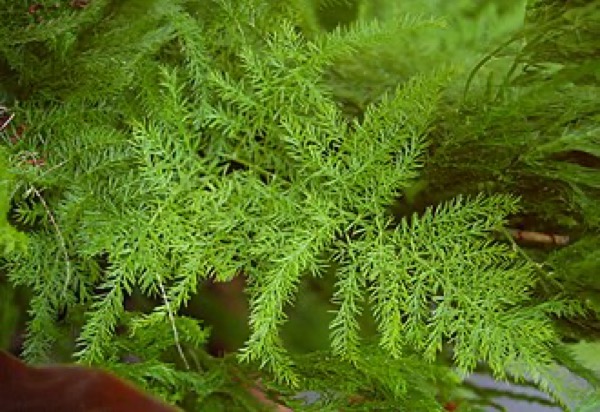
Main photo: David J. Stang · CC BY-SA 4.0 · Wikimedia Commons
It forms long, trailing stems covered in fine “leaflets” that look like soft needles. It is hardy and looks lovely in hanging pots. It produces small red berries, which are toxic.
Hanging pots or high shelves on a covered balcony or near a bright window.
Partial shade to indirect light. Afternoon sun turns the stems yellow.
Keep slightly moist in spring and summer and water less in winter.
Despite looking like a fern, it is not a fern: the “leaves” are flattened stems, and the true leaves are tiny spines.
The ASPCA classes asparagus fern as toxic to dogs and cats. Eating the berries can cause vomiting, abdominal pain and diarrhoea, and repeated contact with the plant can irritate the skin. In people, toxicity is low, but the berries should not be eaten. If your pet eats the plant, contact a vet.
If your pet eats any part of it, contact a vet or a poisons information service.
Stems turning yellow and dropping their “leaflets”.
Causes: Compost that dried out too much, too little light or strong afternoon sun.
What to do: Adjust watering and light, and cut dry stems back to the base. It will regrow.
Wilted stems and a darkened base.
Causes: Waterlogged soil.
What to do: Let it dry out more between waterings and check the pot's drainage.
Keep slightly moist in spring and summer, which usually means watering about every 5 days, and water less in winter. The roots store water, so it can cope with a missed watering. momiroot reminds you to water and shows the weather in your city.
No. Despite its looks, it is related to edible asparagus. The “leaflets” are flattened stems.
Yes. The ASPCA lists it as toxic to dogs and cats, especially the red berries. If your pet eats it, contact a vet.
Listed in: Plants for low light · Easy-care plants · Foliage plants · Genus Asparagus
Sources: ASPCA · GBIF · POWO (Kew) · NC State Extension