
 Português
 Español
 Français
 Deutsch
 Italiano
Watering · 2 min read
Plants in water: what water growing is and how to start
Do you know what hydroponics is? Learn how to grow plants in water alone, which ones do well, how to change the water, feed them and deal with slime and algae.
In this guide · 6 parts
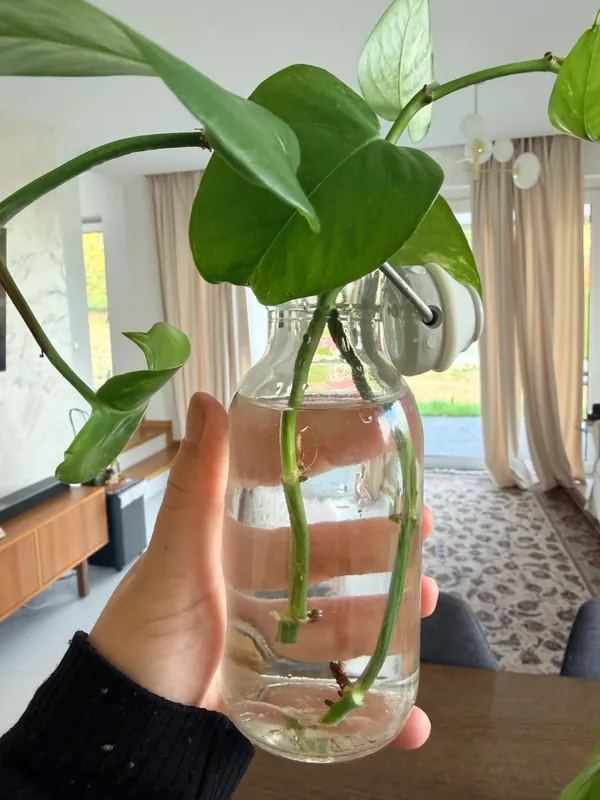
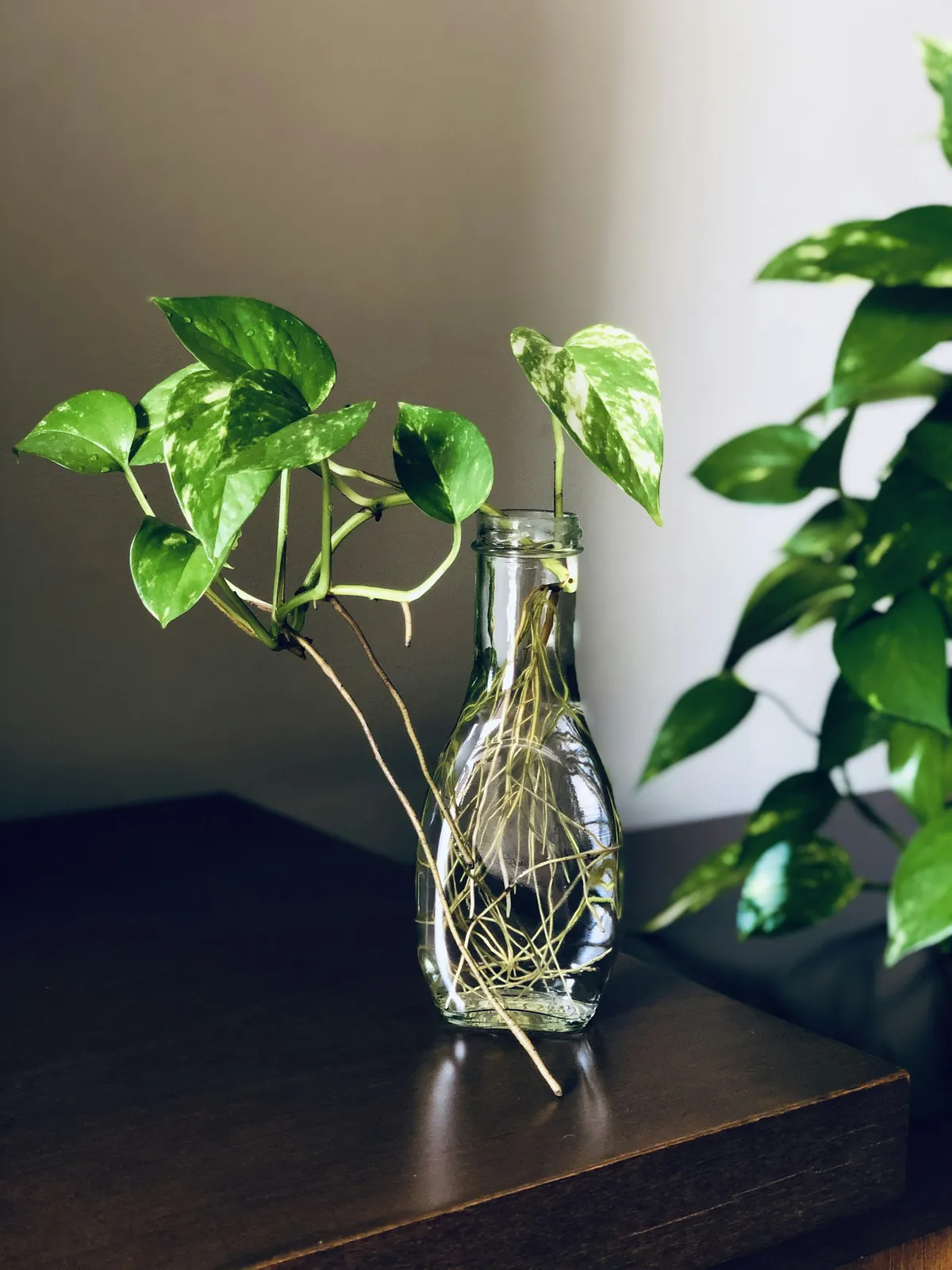
Do you know what hydroponics is? It's growing without soil, with the roots in a solution of water and nutrients. At home, the simplest version is a glass of water with a cutting in it: water growing.
What changes in the roots
Water roots are different from soil roots: thinner and more fragile, they take up the oxygen dissolved in the water. Nutrients only come if you add diluted fertiliser. That's why the water needs to be clean and the light bright, with no direct sun on the glass.
Which plants do well
These usually root easily in a glass:
- Devil's ivy
- Heartleaf philodendron (Philodendron hederaceum)
- Arrowhead plant
- Lucky bamboo
- Spider plant, which does better in soil after a few months
Devil's ivy, philodendron, arrowhead plant and lucky bamboo live for years in water. The spider plant roots easily, but the baby plants weaken if they stay in water alone for too long.
How to do it, in 3 steps
- Only the roots in the water. Keep the node and the roots submerged and the leaves out. A leaf under water rots. The node is the point where the leaf grows.
- Change all the water every week and wash the glass at the same time. Standing water is a breeding ground for mosquitoes.
- Feed lightly. Every 4 to 6 weeks, add liquid fertiliser at 1/4 of the label dose to the fresh water. Plain water has no nutrients.
Green water? Wash everything
Light hitting the glass makes algae grow. If the water turns green, wash the glass and the roots under running water and change the water. A coloured glass helps. Lucky bamboo is sensitive to chlorine and fluoride, so use filtered water or rainwater. See which water to use for plants.
Roots with slime, dark or soft?
It's usually a lack of oxygen and the start of rot. There can be other causes, such as hot water or a dirty glass. Take the cutting out, trim the soft parts with clean scissors, wash it, and change the water and the glass.
In water, new leaves usually come out smaller than in soil. If that bothers you, move the plant to a pot.
Take care with pets
Devil's ivy, philodendron, arrowhead plant and lucky bamboo are toxic to dogs and cats. The sap of these plants can irritate the skin, so wear gloves when cutting. Keep the glasses out of your pets' reach and, if yours chews a plant, see a vet. The spider plant is safe for dogs and cats.
Sources
- Devil's ivy, ASPCA: https://www.aspca.org/pet-care/animal-poison-control/toxic-and-non-toxic-plants/golden-pothos
- Philodendron (Philodendron hederaceum), ASPCA: https://www.aspca.org/pet-care/animal-poison-control/toxic-and-non-toxic-plants/heartleaf-philodendron
- Arrowhead plant, ASPCA: https://www.aspca.org/pet-care/animal-poison-control/toxic-and-non-toxic-plants/nephthytis
- Spider plant (safe), ASPCA: https://www.aspca.org/pet-care/animal-poison-control/toxic-and-non-toxic-plants/spider-plant
- Lucky bamboo, NC State Extension: https://plants.ces.ncsu.edu/plants/dracaena-sanderiana/
- Devil's ivy, NC State Extension: https://plants.ces.ncsu.edu/plants/epipremnum-aureum/
- Plants in water, UVM Extension: https://www.uvm.edu/pss/ppp/articles/waterin.html
- Standing water and mosquitoes, Brazilian Ministry of Health: https://www.gov.br/saude/pt-br/assuntos/noticias/2025/novembro/dez-dicas-para-eliminar-focos-do-mosquito-da-dengue