
 Português
 Español
 Français
 Deutsch
 Italiano
 Polski
Yellow leaves
Leaves turning yellow and the plant wilting.
Causes: Too much water or standing water in the saucer, which rots the roots.
What to do: Wait for the top of the compost to dry and empty the saucer.
Foliage · Easy · Partial shade to bright indirect
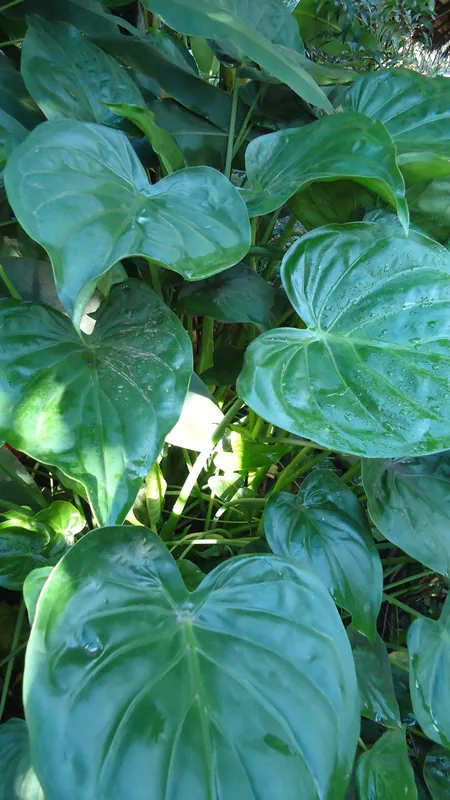
Philodendron brandtianum · also known as silver leaf philodendron, philodendron brandtianum · Family Araceae
Main photo: Martha Lucia Ortiz Moreno · CC BY 4.0 · Wikimedia Commons
A climber with heart-shaped leaves, olive green with silver patches. It looks lovely trailing or climbing a pole.
Shelf or hanging pot near a bright window, out of direct sun.
Indirect light. Direct sun scorches the leaves.
Wait for the top of the compost to dry before watering.
It is a Brazilian philodendron, native to the Amazon, even though it is almost always sold under its English name.
Like other philodendrons, it has calcium oxalate crystals. The ASPCA classes philodendrons as toxic to dogs and cats: they cause irritation and burning in the mouth, drooling and vomiting. In people, toxicity is low, but the sap can irritate the skin. If it is eaten, contact a vet.
If your pet eats any part of it, contact a vet or a poisons information service.
Leaves turning yellow and the plant wilting.
Causes: Too much water or standing water in the saucer, which rots the roots.
What to do: Wait for the top of the compost to dry and empty the saucer.
White spots or fine webs on the leaves.
Causes: Common pests on philodendrons.
What to do: Clean the leaves and repeat for a few weeks.
Wait for the top of the compost to dry before watering, which usually means about every 6 days. momiroot reminds you to water and shows the weather in your city.
Yes. The ASPCA classes philodendrons as toxic to cats and dogs. If your pet chews the plant, contact a vet.
Yes. It is native to the Amazon, in Acre, Amazonas and Mato Grosso.
Listed in: Plants for low light · Easy-care plants · Foliage plants · Plants native to Brazil · Genus Philodendron
Sources: ASPCA · GBIF · POWO (Kew) · NC State Extension