
 Português
 Español
 Français
 Deutsch
 Italiano
 Polski
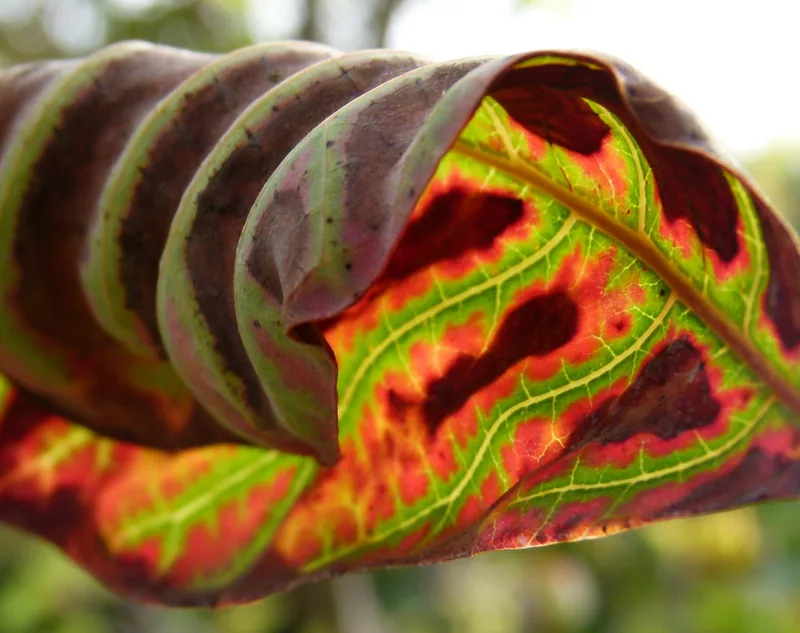
Curling leaves
Leaves curling.
Causes: Lack of water.
What to do: Water and keep the compost evenly moist.
Foliage · Moderate · Partial shade to bright indirect
Goeppertia ornata · also known as pinstripe plant, calathea ornata · Family Marantaceae
Main photo: Fuzzform at English Wikipedia · CC BY-SA 3.0 · Wikimedia Commons
It has dark green leaves striped with fine pink lines, as if painted by hand. Like other calatheas, it likes soft light and humid air.
Bedroom or living room with indirect light and humid air, away from draughts.
Indirect light or partial shade. Direct sun scorches the leaves.
Keep the compost evenly moist, without waterlogging it or letting it dry out.
In the trade, it is still sold under its old name, Calathea ornata.
The ASPCA classes calatheas as non-toxic to dogs and cats.
If your pet eats any part of it, contact a vet or a poisons information service.
Leaves curling.
Causes: Lack of water.
What to do: Water and keep the compost evenly moist.
Dry, brown edges.
Causes: Dry air, cold wind or direct sun.
What to do: Cut off the dry part, raise the humidity and move it out of the sun.
Wilted plant with waterlogged compost.
Causes: Too much water.
What to do: Let the surface dry and check the drainage.
Keep the compost evenly moist, which usually means watering about every 4 days. Neither dry nor waterlogged. momiroot reminds you to water and shows the weather in your city.
Not direct sun, which scorches and darkens the leaves. It prefers indirect light or partial shade.
No. The ASPCA lists calatheas as non-toxic to dogs and cats.
Listed in: Plants for low light · Pet-safe plants · Foliage plants · Genus Goeppertia
Sources: NC State Extension · GBIF · POWO (Kew) · ASPCA