
 Português
 Español
 Français
 Deutsch
 Italiano
 Polski
Lower branches drying
The lowest branches turn brown and fall.
Causes: Too little light for too long.
What to do: Move it somewhere much brighter. Lost branches do not grow back.
Foliage · Moderate · Bright indirect to full sun
Araucaria heterophylla · also known as norfolk pine, norfolk island pine · Family Araucariaceae
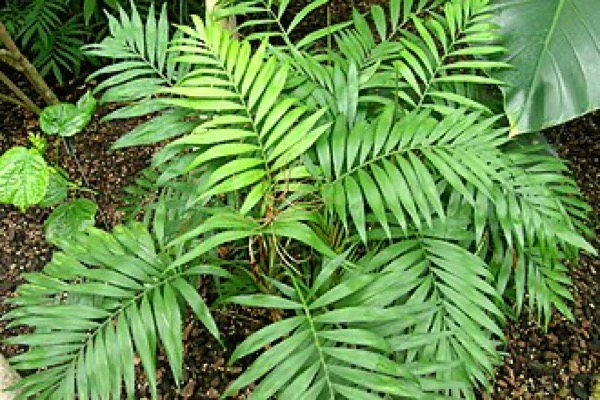
Main photo: Bff · CC BY-SA 3.0 · Wikimedia Commons
A tree with branches in regular tiers, with soft, needle-like leaflets. In a pot, it grows slowly and is widely used as a living Christmas tree.
Near a very bright window or on a balcony; indoors, in a cool room.
Full sun or plenty of brightness. With too little light, it loses its lower branches.
Water regularly from spring to autumn, without waterlogging, and sparingly in winter.
Despite the name, it is not a pine: it is related to the Brazilian araucaria.
The ASPCA classes the Norfolk Island pine as non-toxic to dogs and cats.
If your pet eats any part of it, contact a vet or a poisons information service.
The lowest branches turn brown and fall.
Causes: Too little light for too long.
What to do: Move it somewhere much brighter. Lost branches do not grow back.
Leaflets turning yellow or falling.
Causes: Soil that is waterlogged or too dry.
What to do: Adjust watering and check the drainage.
Water regularly from spring to autumn, about once a week, without waterlogging. In winter, water sparingly. momiroot reminds you to water and shows the weather in your city.
Yes, in a very bright, cool spot. With too little light, it loses its lower branches after a few years.
No. The ASPCA lists it as non-toxic to dogs and cats.
Listed in: Pet-safe plants · Foliage plants
Sources: ASPCA · GBIF · POWO (Kew) · NC State Extension